CASE STUDY · PROJECT RESCUE
Rescuing a startup that outgrew its MVP
Every new feature broke something else. The team had no tests and no way to tell what a change would touch, so releases kept slowing down. Three months later they had 80% test coverage, automated releases for every update, and a website rebuilt from scratch.
7→<1s
Load time
~80%
Test coverage
3 mo
Engagement
THE SITUATION
Tangled code, no tests
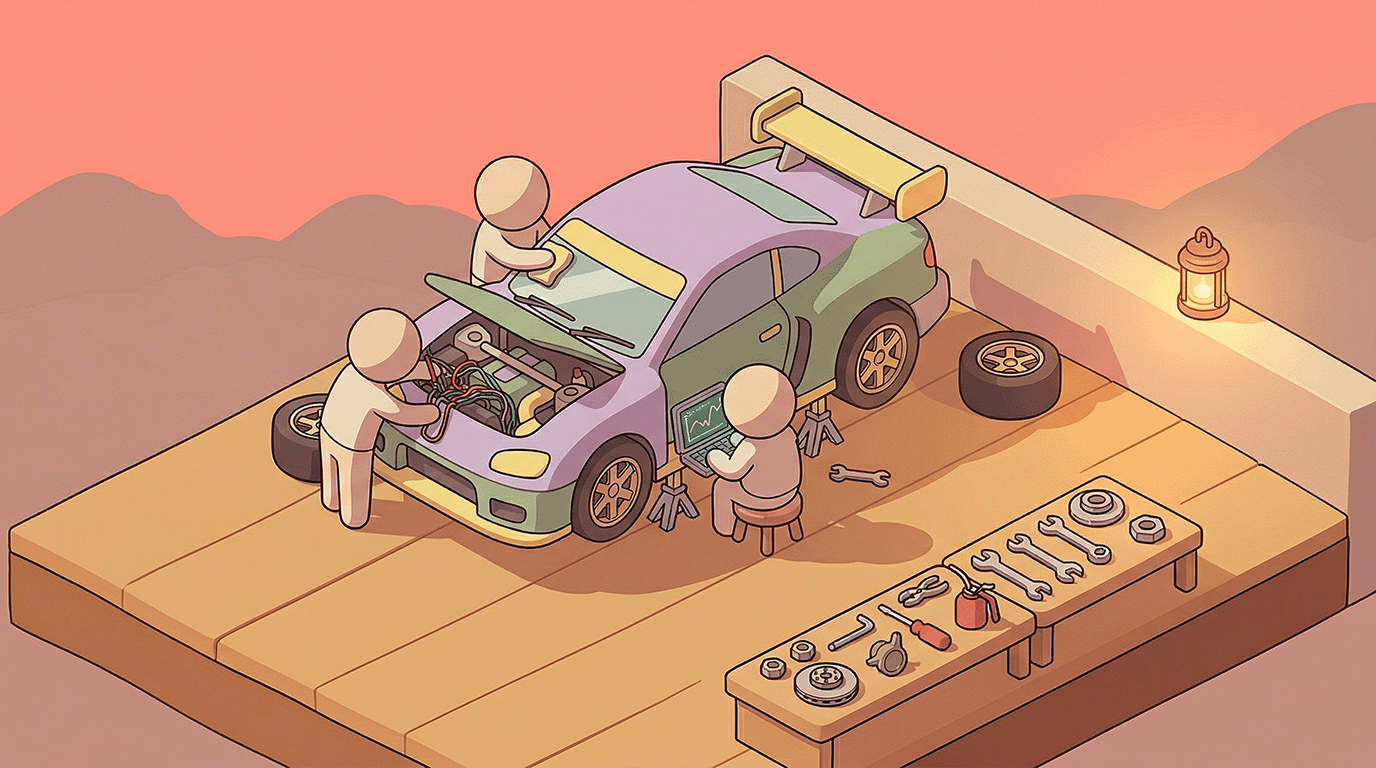
The codebase had carried the company to Series A, but it had been thrown together fast and it showed. There were no migration controls on the data layer, so a single schema change could break the live product. No tests anywhere. Releases were manual, and each one took longer than the last because nobody could be sure what a change would touch. The website was its own problem. An outsourced agency had built it on Payload CMS and fought the framework the whole way — every small change spawned another React component, until the front end had sprawled into something nobody could maintain. Load time was seven seconds.

THE BRIEF
Get the team shipping confidently again
The CTO needed two things: a codebase the engineering team could change without holding their breath, and a website that loaded fast enough to stop losing visitors. He also wanted his four engineers writing tests on their own by the end of the engagement, so they wouldn't depend on us to keep it going.
THE WORK
Test automation and a full website rebuild
We opened with a code audit: a full read of the codebase and infrastructure, sorting the dangerous from the merely messy. Then we ran the app and the website in parallel. On the app side, we paired with the engineers on features they were already building and wrote the tests right alongside them. Real code, not toy examples. That's why it stuck: inside two weeks they were doing it without us. Once there was enough coverage to refactor without fear, we started pulling the tangled pieces apart, separating concerns and untangling the data flow. A deployment pipeline went in too, so shipping stopped being an event somebody dreaded. The website was a different animal, past saving. We rebuilt all 46 components from scratch, this time with the framework instead of against it. Load time dropped from seven seconds to under one.
THE OUTCOME
80% coverage and shipping again
By the end of the engagement the team had close to 80% test coverage and a deployment pipeline running for every update. They were shipping features again, confidently. The website was fast and the team could update it themselves. The CTO had a codebase that made sense and engineers who could move independently. We checked in every few weeks after that. They didn't need much.
FAQs
Common questions
It's what happens when a software project has stalled or gone off the rails. We come in, audit what's there, figure out what's broken versus what needs cleaning, and fix it. The fix can be targeted patches, or it can mean ripping things out and rebuilding.
Outgrowing your codebase?
Tell us what's going on. We'll give you an honest read and a clear next step.